


We hear it all the time from shoppers: “Is foam better than hybrid?” or “What’s the difference between latex and memory foam?” While materials are important, our experts at Rice’s Appliance & Bedding Center know they aren’t the first thing your body notices.
As soon as you lie down, you notice how the mattress feels. Do you sink in or stay supported? Does it hug your shoulders and hips, or gently push back? When you roll over, does it respond right away or take a moment? These details shape your sleep experience.
Each material has a different feel. Instead of memorizing what’s inside the mattress, focus on how you want it to feel. When you think about contour, bounce, pushback, and stability, choosing a mattress feels much simpler.

The Deep Hug: What Foam Feels Like
If you’ve ever felt a mattress gently wrap around you, almost like it was made just for you, that’s the effect of foam. This “melt in” feeling is something people either love or quickly decide isn’t for them.
- That slow sink: Foam (especially memory foam) responds to your weight and body heat. You’ll notice yourself gradually settling in, especially around your shoulders and hips. It’s less “bounce” and more “ahhh, there I go.”
- Body-hugging contour: Foam fills in the gaps. If you slide your hand under your lower back, you might not feel much space. This close contact can reduce pressure points and feel very cozy.
- Minimal bounce: When you change positions, it doesn’t spring back quickly. It’s slower and more absorbent. Some people say it feels like floating, while others compare it to moving through soft sand.
- Motion control: Foam is great at isolating movement. If your partner moves during the night, you’re less likely to feel every flip and flop.
This type of feel often works well for side sleepers, people sensitive to pressure, or anyone who enjoys a cocooned, tucked-in sensation.
When testing foam, roll from your back to your side. Notice if the slower response feels calming or if it takes too much effort. Your reaction in that moment can tell you a lot.
The Lift and Bounce: What Latex Feels Like
Now let’s flip the script. If foam is a slow hug, latex gives a gentle lift. As soon as you lie down, you’ll notice it feels responsive and supportive without that deep sink.
- On top, not in: Latex keeps you more lifted. You’ll feel supported right away, without feeling swallowed up. There’s less of a melting sensation and more of a buoyant, balanced feel.
- Quick response: Move your leg. Roll to your side. Shift your shoulder. Latex reacts immediately. There’s no delay, making it easier to change positions without feeling stuck.
- Subtle bounce: It’s not as springy as an old innerspring mattress, but it feels lively without being distracting.
- Consistent pushback: Latex has natural elasticity, providing steady and even support. You’ll feel the mattress pushing up to support you instead of letting you sink in deeply.
This feel often suits combination sleepers, people who move a lot at night, or anyone who doesn’t like the stuck feeling that foam can create.
When testing latex, try sitting and standing up a few times. Notice how easy it is to change positions. If it feels effortless, that responsiveness could be just right for you.
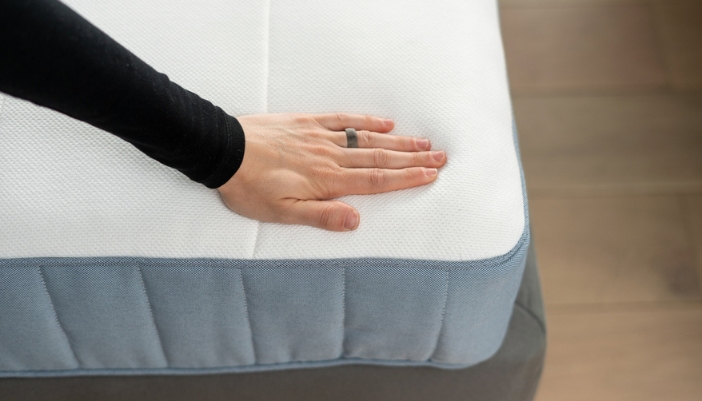
The Balanced Middle: What Hybrid Feels Like
If foam is a hug and latex is a lift, hybrid is somewhere in between. It combines cushioning on top with coils underneath, creating a balanced feel for many sleepers.
- Cushion + structure: You’ll usually feel a layer of contouring comfort first, followed by a firmer, supportive base. It’s a mix of pressure relief and steady support.
- Noticeable stability: Thanks to the coil system, hybrids tend to feel sturdy. When you lie down, there’s less of that slow sink and more of a solid, grounded sensation.
- Responsive but controlled: Hybrids typically have more bounce than all-foam beds, but not as much as a traditional spring mattress. You can move easily without feeling like you’re on a trampoline.
- Stronger edges: Sit on the side of a hybrid, and you’ll likely feel secure. The coils provide better edge support, which is helpful if you share a bed or use the whole mattress.
Hybrids tend to feel “familiar” to many shoppers because they combine traditional support with modern comfort layers. They’re a good starting point if you’re unsure which type to choose.
When you test a hybrid, lie near the edge for a minute. If you feel stable and supported without sliding off, that extra structure could be a game-changer.
How You Move at Night Matters
This is where things get personal. How you sleep is not just about comfort, but also about movement. Some people change positions often, while others stay in one spot all night. Your mattress should match your sleep habits.
- If you change positions often during the night, you’ll probably want a mattress that responds quickly. This makes movement feel smooth and easy, not like hard work.
- If your shoulders or hips get sore, you may prefer a mattress with more contouring. This closer contact can cushion those high-pressure areas.
- If you often sit on the edge of the bed, like when tying your shoes or using your phone, stronger edge support will make the bed feel more stable instead of sloped.
- If you share a bed and one person moves more than the other, motion control is important. Some materials absorb movement better, while others transfer more bounce.
Your sleep style is unique to you. The mattress that works for your friend might not feel right for you, and that’s completely normal.

Quick Self-Check: Which Feel Sounds Like You?
By now, you probably noticed yourself nodding along to one description more than the others. That’s not random. We tend to gravitate toward certain sensations, even if we’ve never put words to them before.
- “I want to feel hugged.” If you love that slow sink and close contour around your shoulders and hips, foam might be your comfort language.
- “I don’t want to feel stuck.” If easy movement and gentle lift matter most, latex could feel more natural under your body.
- “I like a little of both.” If you want cushioning without losing that sturdy, grounded support, hybrid might be your middle ground.
- “I share a bed.” Think about motion and edge stability. Some materials isolate movement better, while others give you stronger perimeter support.
The goal isn’t to memorize mattress materials. It’s to notice how you react. When you lie down, do you relax right away, or do you tense up a little?
The Right Feel Makes the Difference
When most people narrow down their options, they realize it’s not just about the mattress material. It’s about how their body responds. Someone lies down, shifts positions, maybe rolls from back to side, and our experts at Rice’s Appliance & Bedding Center can see the moment it feels right. Shoulders relax, movement feels easy, and there’s no hesitation.
If you’re unsure which feel is right for you, we’re here to help. Visit us, ask questions, and take your time trying different options. When you combine our knowledge with your own experience, finding the right comfort style becomes much easier. Better sleep starts with that first moment when it feels right.